
Table of Contents
After water damage, tackling mold cleanup is vital to safeguard your health and home. You need to assess the damage first, then gear up with the right protective equipment. Identifying mold-prone areas is essential, as is knowing how to properly dispose of contaminated materials. With the right cleaning solutions and methods, you can mitigate the risks. But what steps should you take to guarantee long-term mold prevention? Let’s explore those critical strategies.
Key Takeaways
- Identify and remove the source of water damage to prevent further mold growth.
- Wear protective gear, including gloves, masks, and goggles, when handling moldy materials.
- Thoroughly document the damage and affected areas for insurance claims and remediation.
- Dispose of contaminated materials safely, sealing them in plastic bags before disposal.
- Keep humidity levels between 30% and 50% and ensure proper ventilation to prevent mold recurrence.
Assess the Extent of Water Damage
Before you plunge into mold cleanup, it’s vital to assess the extent of water damage in your space. Start by identifying the water source was it a burst pipe, a leaky roof, or flooding? Understanding this will help prevent future issues.
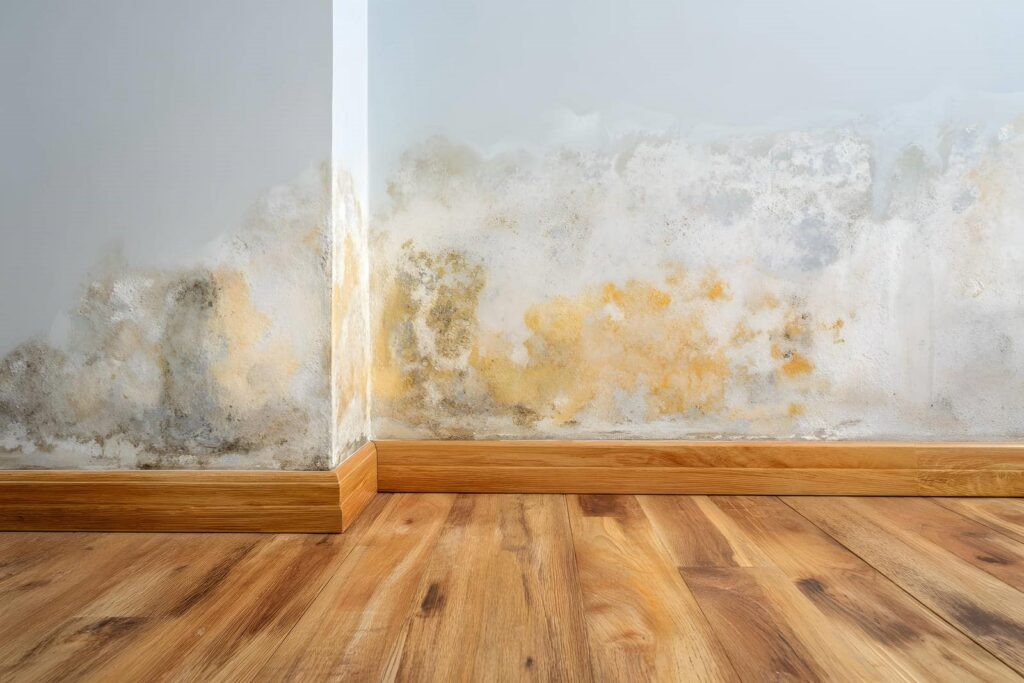
Once you’ve pinpointed the source, conduct a thorough damage assessment. Check walls, floors, and ceilings for discoloration, warping, or dampness. Use a moisture meter if available, as this tool can provide precise readings. Document all affected areas, noting the severity of the damage.
This step is significant, as it not only helps you gauge the cleanup effort required but also assists in any insurance claims you may file. By taking these steps, you’re ensuring a more efficient and effective mold remediation process, ultimately safeguarding your home and creating a healthier environment for everyone who belongs there.
Wear Protective Gear
When tackling mold cleanup, wearing protective gear is essential to safeguard your health. Mold spores can cause respiratory issues and allergic reactions, so it’s vital to equip yourself properly.
Start with protective clothing—long sleeves and pants made of durable material can shield your skin from exposure. Don’t forget gloves; rubber or nitrile gloves are best for preventing direct contact with mold.
Safety equipment is equally important. A face mask or respirator rated for mold protection will help filter out harmful spores as you work. Goggles can protect your eyes from irritation.
Always make sure your protective gear fits well and is in good condition to maximize its effectiveness.
Identify Mold-Prone Areas
Identifying mold-prone areas in your home is essential for effective mold prevention and cleanup. Start by inspecting spaces where moisture sources are common, such as bathrooms, kitchens, and basements.
Look for any signs of water leaks, condensation, or dampness, as these create the perfect environment for various mold types to thrive. Pay close attention to areas around windows, pipes, and roofs, where water can accumulate.
Additionally, consider checking behind appliances and under sinks, as these hidden spots often harbor moisture that can lead to mold growth.
Don’t forget to monitor humidity levels in your home; ideally, keep it below 50%. Regularly check for any signs of mold, such as discoloration or musty odors, as early detection is key.
Remove Contaminated Materials
Once you’ve identified affected areas, it’s essential to remove contaminated materials promptly to prevent further spread.
Make sure to dispose of these materials safely, adhering to local guidelines for hazardous waste.
Taking these steps not only clears your space but also sets the foundation for preventing future mold growth.
Identify Affected Areas
As you assess your space for mold contamination, pinpointing affected areas is essential to effectively managing the cleanup process.
Start by using moisture detection tools to identify hidden damp spots, as mold thrives in moisture-rich environments.
Employ mold identification techniques, such as visual inspections and air quality tests, to reveal areas where mold may be lurking.
Focus on places like basements, bathrooms, and around windows, where water damage is common.
Once you’ve identified these spots, inspect materials like drywall, carpets, and insulation for signs of contamination.
Remember, the sooner you address these affected areas, the better your chances of preventing further mold growth and protecting your home.
Take action and guarantee your space remains safe for you and your loved ones.
Safely Dispose Materials
When dealing with mold contamination, it’s crucial to properly dispose of any affected materials to prevent further spread and health risks.
Start by identifying items that are porous, like carpets and drywall, as they can trap mold and are often considered hazardous waste. Follow local disposal guidelines for hazardous materials to guarantee you’re handling these items safely.
Seal contaminated materials in plastic bags to minimize spore release during removal. Always wear protective gear, including gloves and masks, when handling moldy items.
After disposal, clean the area thoroughly to eliminate any remaining spores. By following these steps, you help create a safer environment for yourself and those around you, fostering a sense of community and well-being.
Prevent Future Growth
After safely disposing of contaminated materials, it’s crucial to focus on preventing future mold growth.
Start by using mold resistant materials for any repairs or renovations. These materials can greatly reduce the risk of mold returning.
Additionally, prioritize humidity control in your home. Aim to keep indoor humidity levels between 30% and 50%. You can achieve this by using dehumidifiers and ensuring proper ventilation, especially in areas prone to moisture like kitchens and bathrooms.
Regularly check for leaks and address them promptly to eliminate excess moisture.
By taking these proactive steps, you’ll not only protect your home but also create a healthier environment for you and your loved ones.
Use Proper Cleaning Solutions
Using the right cleaning solutions is crucial for effective mold removal, as not all products are equally effective against mold spores. Start by selecting strong cleaning agents specifically designed for mold remediation.
Look for those that contain mold inhibitors, as these will help prevent future growth while eliminating existing spores. Common household products like vinegar or baking soda can be useful, but for serious infestations, consider commercial mold removers that are EPA-approved.
When applying these solutions, make sure you follow the manufacturer’s instructions for the best results. This not only maximizes effectiveness but also keeps you safe.
Ensure Adequate Ventilation
To effectively manage mold cleanup, ensuring adequate ventilation is essential.
Open windows and doors to promote airflow, and strategically use fans to help circulate air throughout the affected area.
This won’t only aid in drying out surfaces but also minimize the risk of mold spores spreading.
Open Windows and Doors
When you tackle mold cleanup, ensuring adequate ventilation is essential, as it helps prevent the spread of spores and mitigates health risks.
One of the simplest ways to achieve this is by opening windows and doors. This allows fresh air to circulate through your space, reducing humidity levels and creating an environment less conducive to mold growth.
As humid air escapes, it’s easier to maintain effective humidity control, which is vital in preventing mold from returning.
While you’re working, keep those openings accessible to facilitate airflow.
Remember, a well-ventilated area not only aids in your cleanup efforts but also fosters a healthier living space for you and your loved ones.
Prioritize ventilation for a more effective mold remediation process.
Use Fans Effectively
Fans play an essential role in effectively managing ventilation during mold cleanup. To maximize their impact, focus on strategic fan placement.
Position fans near windows or doors to create a cross-breeze, facilitating airflow management that helps disperse moisture-laden air. Aim the fans to blow air out of the space, effectively pulling in fresh air from outside. This approach reduces humidity levels and accelerates the drying process, vital for preventing mold regrowth.
Additionally, consider using multiple fans to cover larger areas, ensuring that every nook and cranny receives adequate airflow. Remember, consistent ventilation not only aids in mold removal but also promotes a healthier environment for you and your family.
Prioritize effective fan usage to enhance your cleanup efforts.
Dry the Affected Area Thoroughly
Although mold thrives in damp environments, drying the affected area thoroughly is vital to preventing its regrowth. Start by using effective drying techniques like dehumidifiers and fans to eliminate moisture quickly.
Aim for a relative humidity level below 50% to create an environment that discourages mold growth. Make certain you focus on all corners, crevices, and hidden spaces where moisture can linger, such as behind walls and under flooring.
Don’t forget to check any porous materials—like carpets and upholstery—since they can retain moisture and become breeding grounds for mold. If items can’t dry out completely, consider replacing them to maintain moisture control.
After drying, inspect the area regularly to confirm it stays dry and mold-free. By taking these proactive steps, you’ll foster a healthier living space for you and your family.
Monitor for Recurring Mold
To guarantee your home remains free of mold, it’s essential to monitor for any signs of recurrence after cleanup.
Regular mold monitoring can help you catch issues before they escalate. Here are four key steps to follow:
Inspect Regularly: Check areas that were previously affected, as well as other damp locations like basements or bathrooms.
Use a Moisture Meter: Invest in a moisture meter to identify areas with high humidity, which can promote mold reoccurrence.
Watch for Odors: Be alert for musty smells, a common indicator of hidden mold growth.
Keep an Eye on Allergies: If you or your family experience increased allergy symptoms, it might signal underlying mold issues.
Implement Preventative Measures
After ensuring your home is clear of mold, taking preventative measures can greatly reduce the risk of future outbreaks.
Start by choosing mold resistant materials for your home, especially in areas prone to moisture, like bathrooms and kitchens. These materials can considerably lower the chances of mold growth.
Next, focus on humidity control. Keeping indoor humidity levels between 30-50% is essential. You can achieve this by using dehumidifiers, ensuring proper ventilation, and fixing any leaks promptly.
Regularly checking and maintaining your HVAC system can also help circulate air and reduce moisture buildup.
Additionally, consider sealing any cracks in walls or foundations to prevent water intrusion.
By staying proactive, you’ll create a healthier living environment for you and your loved ones, fostering a sense of belonging and comfort in your home.
Frequently Asked Questions
How Long Does It Take for Mold to Grow After Water Damage?
Mold can start growing within 24 to 48 hours after water damage, depending on factors like humidity, temperature, and material type. Understanding this mold growth timeline helps you act quickly to prevent further issues.
Can I Use Bleach to Remove Mold Effectively?
You can’t effectively use bleach for mold removal; it often masks the problem rather than eliminating it. Consider safer bleach alternatives like vinegar or hydrogen peroxide, which provide better results when paired with proper mold removal techniques.
What Are the Health Risks Associated With Mold Exposure?
Mold exposure can lead to respiratory issues and allergic reactions, while some individuals might face severe fungal infections. You’ll want to recognize mold symptoms early to protect your health and maintain a safe environment.
How Can I Tell if Mold Is Hidden Behind Walls?
To detect hidden mold, use mold detection techniques like moisture meters or infrared cameras. Look for hidden mold indicators such as musty odors, water stains, or peeling paint, which often signal mold growth behind walls.
Should I Hire a Professional for Mold Cleanup?
Think of mold as a silent intruder; hiring professional services for mold remediation guarantees you reclaim your space safely. They’ve got the expertise and tools to tackle hidden problems, giving you peace of mind.
Wrap-Up
Tackling mold cleanup after water damage is like maneuvering through a maze; each step requires careful attention to detail. By evaluating damage, wearing protective gear, and using the right cleaning solutions, you can effectively eliminate mold and safeguard your health. Remember to guarantee proper ventilation and monitor for any signs of recurrence. Taking these proactive steps will not only restore your space but also create a healthier environment for you and your loved ones.