
Table of Contents
When it comes to basement water extraction, knowing the right methods can make all the difference in minimizing damage. You’ll want to assess the situation first, whether it’s a small leak or a larger flood. Employing the right tools and techniques not only improves efficiency but also protects your property. Understanding your options is vital, especially when considering preventative measures for the future. Let’s explore these methods in detail to guarantee you’re fully prepared.
Key Takeaways
- Utilize wet/dry vacuums for quick extraction of smaller leaks and debris efficiently.
- Employ submersible pumps for effective water removal in flooded basements.
- Use buckets and squeegees for manual water removal in larger spills.
- Implement fans and dehumidifiers post-extraction to ensure thorough drying.
- Consider professional water extraction services for advanced equipment and expertise.
Understanding Basement Water Issues
When you encounter water issues in your basement, it’s crucial to understand the underlying causes and potential consequences. Water damage can stem from various sources, including heavy rainfall, plumbing leaks, or poor drainage. Each of these issues can lead to significant structural problems if not addressed promptly.
Moisture control is important in preventing these concerns. You should routinely inspect your basement for cracks in walls or floors, which can allow water infiltration.
Verify that gutters and downspouts direct water away from your foundation to minimize exposure. Consider using a dehumidifier to manage humidity levels, helping to prevent mold growth and further degradation of materials.
Manual Water Extraction Techniques
Although water extraction can be a challenging task, employing manual techniques effectively addresses smaller leaks and localized flooding in your basement.
Start by using a wet/dry vacuum that’s designed for water removal; it’s one of the most effective strategies for quick extraction. Verify you wear protective gear, including gloves and boots, to safeguard against contaminants.
For larger spills, consider using buckets to scoop out water manually. This method is labor-intensive but can be quite effective if you don’t have access to machinery.
Additionally, squeegees can help direct water towards your exit points, making the process smoother.
After you’ve removed the bulk of the water, fans and dehumidifiers should be used to dry out the space and prevent mold growth.
Submersible Pumps for Efficient Water Removal
To efficiently manage significant water accumulation in your basement, submersible pumps are an excellent solution. These pumps are designed to operate underwater, effectively removing water without causing damage to the surrounding area.
There are various submersible pump types available, including pedestal and submersible sump pumps, each suited for specific applications.
When choosing a pump, consider the horsepower and the volume of water you need to eliminate. For peak performance, follow essential pump installation tips: verify the pump is properly submerged, connect it to a reliable power source, and install a backup system for emergencies.
Regular maintenance is vital; check for clogs and test the float switch frequently.
Wet/Dry Vacuums: A Practical Solution
Wet/dry vacuums offer an efficient solution for removing water from your basement, handling both liquid and solid debris with ease.
Their versatile usage options make them suitable for various cleanup tasks beyond water extraction, ensuring you get maximum value from your investment.
With a few simple maintenance tips, you can keep your vacuum in peak condition for reliable performance.
Efficient Water Removal
When water invades your basement, speed is essential, and using a wet/dry vacuum is one of the most effective methods for efficient water removal. This powerful tool can quickly extract standing water, helping you minimize water damage and maintain moisture control.
Unlike traditional vacuums, wet/dry vacuums are designed to handle both liquid and solid debris, making them ideal for flooded basements.
To achieve the best results, make sure you select the right vacuum for your space and follow the manufacturer’s guidelines for usage. Start by removing furniture and other items from the affected area to prevent further damage.
With a wet/dry vacuum, you can swiftly tackle water issues, protecting your home and creating a safer environment for you and your family.
Versatile Usage Options
Although many people associate wet/dry vacuums primarily with water extraction, their versatility extends far beyond that single function.
These versatile tools serve multiple purposes, making them a valuable addition to any home. Here are some adaptable methods you can employ:
Dust Collection: Use it to clean up sawdust and debris during projects.
Dry Debris Cleanup: Perfect for collecting dirt and small particles from floors and carpets.
Car Detailing: Great for vacuuming out your car’s interior, reaching tight spots effortlessly.
Flood Cleanup: Ideal for quickly removing standing water from basements or garages.
Easy Maintenance Tips
Maintaining your wet/dry vacuum is key to guaranteeing it operates efficiently and lasts longer.
Regularly inspect the filters; clean or replace them as needed to enhance suction power. Empty the tank after each use to prevent clogs and odors, which is essential for effective basement maintenance.
Check the hoses and attachments for any blockages or wear, as these can hinder performance. Confirm electrical components are dry and free of debris to avoid safety hazards.
Additionally, consider using your vacuum for routine water prevention tasks, like removing moisture from the air or cleaning spills.
Professional Water Extraction Services
When facing significant water damage, professional water extraction services can be your best option.
These experts utilize advanced equipment that efficiently removes water while employing expert assessment techniques to identify underlying issues.
This combination guarantees a thorough and effective restoration process, safeguarding your basement from future problems.
Advanced Equipment Utilization
Utilizing advanced equipment is essential for effective water extraction in basements, ensuring that every drop is removed efficiently and safely.
With the right tools, you can tackle water issues more effectively. Here’s a quick equipment comparison to evaluate:
Submersible Pumps: Ideal for large volumes of water, these pumps can quickly remove standing water.
Wet/Dry Vacuums: Perfect for smaller spaces, they handle both liquid and debris.
Dehumidifiers: Essential for moisture control, they help prevent mold growth post-extraction.
Infrared Cameras: Useful for detecting hidden moisture, ensuring thorough assessment.
Investing in advanced technology not only speeds up the process but also enhances the overall outcome, giving you peace of mind and a dry basement.
Expert Assessment Techniques
While many homeowners attempt DIY water extraction methods, seeking professional assessment techniques is often the most effective approach to guarantee thorough and safe remediation.
Experts utilize advanced tools for accurate drainage assessment, ensuring they identify problem areas that mightn’t be visible to the untrained eye.
By employing moisture mapping, professionals can visualize moisture distribution across your basement, pinpointing hidden pockets that require attention. This precision allows for a tailored extraction plan, minimizing the risk of mold growth and structural damage.
With their expertise, you can feel confident that every aspect of the water issue is addressed exhaustively, providing peace of mind and restoring your home to a safe, dry environment.
Trusting professionals enhances the likelihood of successful remediation.
Advanced Equipment for Large-Scale Extraction
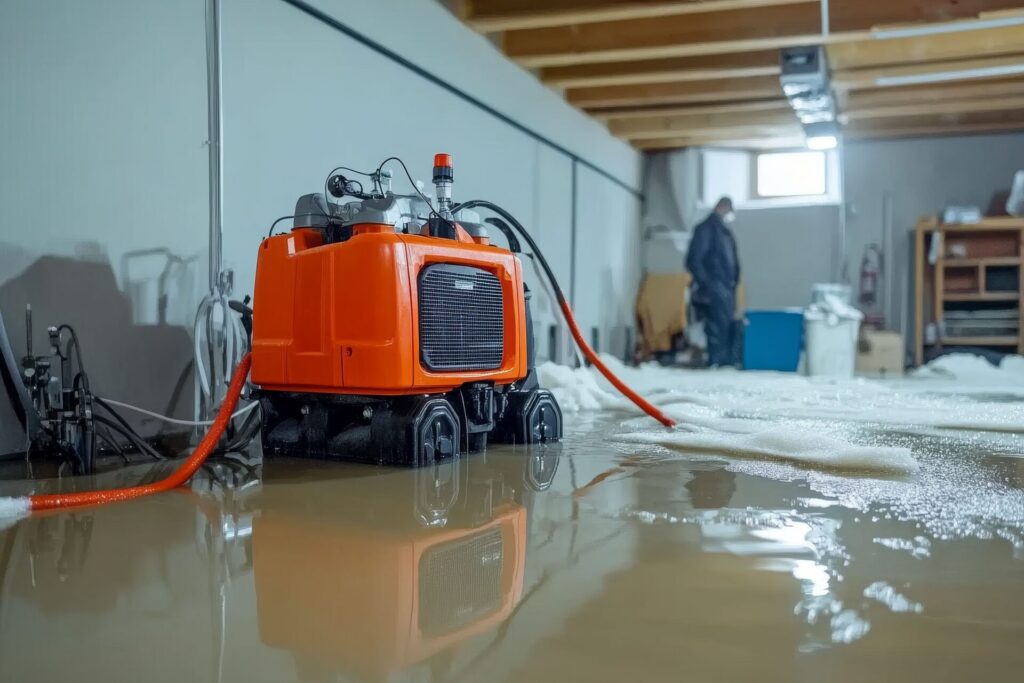
Advanced equipment for large-scale water extraction plays a fundamental role in effectively managing considerable flooding situations in basements.
When you’re faced with overwhelming water, utilizing the right tools is essential for efficient extraction and restoration.
Here are four key pieces of equipment you should consider:
Industrial Grade Pumps: These powerful pumps quickly remove large volumes of water, markedly reducing standing water levels.
High Capacity Dehumidifiers: They’re essential for controlling moisture levels post-extraction to prevent mold growth and structural damage.
Wet/Dry Vacuums: Ideal for smaller areas, these vacuums can tackle residual water that larger pumps may miss.
Water Extraction Mats: These mats can pull water from surfaces like carpets and hardwood floors, ensuring a thorough drying process.
Preventative Measures to Avoid Future Flooding
To effectively prevent future flooding in your basement, it’s crucial to implement a combination of proactive measures and regular maintenance.
Start by investing in high-quality drainage systems that direct water away from your foundation. Properly installed gutters and downspouts should channel rainwater at least six feet from your home’s perimeter.
Additionally, consider installing flood barriers around your property. These barriers can provide an extra layer of defense against heavy rainfall and rising water levels, helping to safeguard your basement.
Regularly inspect your drainage systems for blockages or damage, and verify that sump pumps are operational and adequately maintained.
It’s also wise to monitor the grading around your home; a slope away from the foundation will further reduce water accumulation.
Post-Extraction Cleanup and Restoration Tips
After successfully extracting water from your basement, it’s vital to address the cleanup and restoration process promptly to prevent mold growth and structural damage.
Implementing effective cleanup protocols and restoration strategies is imperative. Here’s a quick checklist to follow:
Dry the Area: Use dehumidifiers and fans to guarantee all surfaces are thoroughly dried.
Clean and Disinfect: Sanitize affected areas with a mixture of water and vinegar or a commercial disinfectant to eliminate bacteria.
Inspect for Damage: Check walls, flooring, and insulation for signs of damage or mold. Replace materials as needed.
Monitor Humidity Levels: Keep an eye on humidity to ensure it stays below 60% to prevent mold resurgence.
Frequently Asked Questions
How Can I Detect Hidden Water Damage in My Basement?
You can detect hidden water damage in your basement by using moisture detection tools and installing water sensors. These devices help you identify leaks early, preventing extensive damage and maintaining a safe, dry environment.
What Safety Precautions Should I Take During Water Extraction?
During water extraction, wear safety gear like gloves and boots. Always check for electrical hazards before starting. Protect yourself; a moment’s care can prevent serious injury and guarantee your basement restoration goes smoothly.
How Long Does It Take for a Basement to Dry After Extraction?
After extraction, a basement typically takes 3 to 7 days to dry, depending on moisture levels and ventilation. Monitoring the drying timeline is essential to prevent mold growth and guarantee a safe environment.
Can I Use My Home Insurance to Cover Water Extraction Costs?
“An ounce of prevention is worth a pound of cure.” Yes, you can often use your home insurance for water extraction costs if your policy covers water damage. Check your coverage details for specifics.
What Are the Signs of Mold Growth After Water Extraction?
You’ll notice signs of mold growth like musty odors, discoloration on surfaces, and respiratory issues. Utilize mold identification techniques to pinpoint hidden growth, as mold can lead to serious health effects if left untreated.
To Sum Up
Effectively tackling basement water issues requires a combination of methods tailored to your specific situation. You might worry about the cost of professional services, but remember, timely extraction can prevent extensive damage and costly repairs down the line. Whether you choose wet/dry vacuums, submersible pumps, or hire professionals, taking action now guarantees your basement stays dry and mold-free. Don’t wait for the next rainstorm; invest in water extraction solutions today for peace of mind tomorrow.