
Table of Contents
When faced with basement water issues, it’s essential to act quickly and methodically. Start by evaluating the situation to identify the extent of the water intrusion. Safety should be your top priority, so make sure to shut off any electricity and gas supplies. After that, you’ll need to gather the right equipment for effective water removal. Understanding these steps can help you mitigate damage and prevent future problems. What comes next might surprise you.
Key Takeaways
- Inspect for water intrusion signs and document damage with photos for insurance and assessment purposes.
- Shut off electricity and gas supplies before starting water removal to ensure safety.
- Use a submersible pump or wet/dry vacuum for effective water extraction from the basement.
- Deploy dehumidifiers and fans to promote drying and reduce moisture levels after water removal.
- Seek professional assistance for persistent water issues to minimize damage and ensure compliance with building codes.
Assess the Situation Quickly
How can you quickly gauge the extent of water damage in your basement? Start by inspecting the area for visible signs of water intrusion, such as puddles, damp walls, or mold.
Use a moisture meter to measure humidity levels in various spots; this’ll give you a clear picture of the damage. Check for any structural issues, like bulging walls or sagging ceilings, which may indicate significant water exposure.
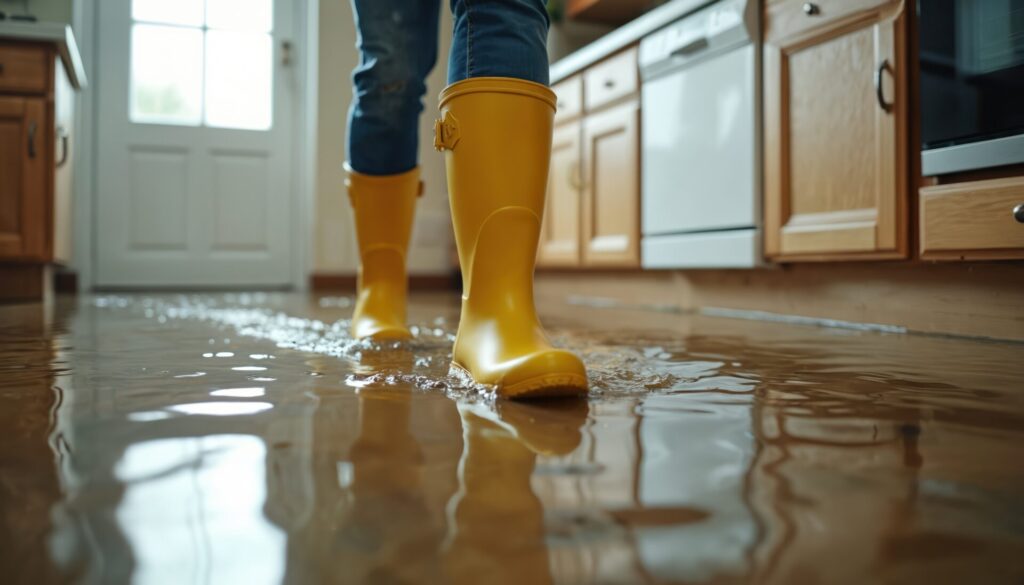
As you assess the situation, prioritize safety precautions. Wear rubber boots and gloves to protect yourself from contaminants.
If you detect electrical hazards, follow emergency protocols by avoiding wet areas and notifying a professional. Document the damage with photos for insurance purposes, maintaining a detailed record of the assessment.
This initial evaluation will guide your next steps in effectively addressing the water damage and securing your space.
Shut Off Electricity and Gas
Before you begin any cleanup efforts in your flooded basement, it’s crucial to shut off electricity and gas supplies to prevent accidents. Water and electricity don’t mix, and submerged electrical outlets can pose a serious risk of shock.
Locate your circuit breaker and switch off the power to the affected areas. If you’re unsure, it’s safer to turn off the main power supply.
Next, turn off the gas supply to avoid potential leaks. Look for the shut-off valve, typically found near the gas meter.
Always prioritize safety precautions during this process. If you’ve got any doubts or feel overwhelmed, don’t hesitate to contact emergency services or a professional to assist you.
Keep emergency contacts handy, including local electricians and gas service providers, to guarantee immediate help is available if needed. Taking these steps helps create a safer environment to tackle the water removal effectively.
Gather Necessary Equipment
Gathering the right equipment is fundamental for effective basement water removal. Start by assembling a submersible pump or a wet/dry vacuum, as these tools are critical for extracting water quickly. Don’t forget heavy-duty extension cords to power your equipment safely, especially in wet conditions.
You’ll also need buckets for manual water removal, as well as mops and towels for final cleanup. Make sure you wear rubber gloves, boots, and a mask to protect yourself from contaminants and mold during the process—these are vital safety precautions.
Additionally, keep a flashlight handy to illuminate dark areas, and consider a dehumidifier for post-removal drying.
Remove Standing Water
To effectively remove standing water from your basement, start by evaluating the water depth to determine the appropriate removal method.
Depending on the volume, you might need a sump pump, wet/dry vacuum, or a combination of both.
Using the right equipment guarantees a quicker and safer extraction process.
Assess Water Depth
Evaluating the water depth in your basement is essential for effective removal of standing water. Start by measuring the water level with a ruler or measuring tape. This helps you determine how much water you’re dealing with and informs your removal strategy.
If the water depth exceeds a few inches, take necessary safety precautions, like wearing rubber boots and gloves, to protect yourself from potential contaminants. Additionally, if the water level is high, consider the risk of electrical hazards from submerged outlets or appliances. Always verify that the power is turned off before entering the area.
Understanding the depth of the water not only aids in planning but also guarantees your safety as you begin the removal process.
Use Proper Equipment
When you’re ready to remove standing water from your basement, using the right equipment is essential for efficiency and safety.
Start with a sump pump, especially if you’re dealing with deep water. These pumps are designed to handle large volumes, effectively drawing water away from your space.
For lighter tasks or smaller areas, a water vacuum can be incredibly useful. It not only removes water but also helps eliminate any residual moisture, reducing the risk of mold growth.
Make certain you have extension cords on hand to reach power sources safely. Always follow the manufacturer’s instructions for both sump pumps and water vacuums.
With the right tools, you’ll feel more confident tackling basement water issues, creating a safer home environment.
Dry Out the Basement
Once you’ve removed the standing water, it’s essential to assess the extent of water damage in your basement.
Using dehumidifiers effectively will help eliminate residual moisture, while improving ventilation systems can further enhance air circulation.
Implementing these strategies will greatly reduce the risk of mold growth and structural damage.
Assess Water Damage
As you begin to tackle the aftermath of water intrusion, evaluating the extent of water damage is essential to effectively dry out your basement.
Start your damage assessment by identifying the water sources, whether it’s from a flood, leaky pipes, or groundwater seepage. Inspect walls, floors, and any stored items for signs of moisture, mold, or structural damage.
Pay attention to drywall and insulation, as these materials can hold water and contribute to mold growth. Use a moisture meter to get precise readings, ensuring you understand the severity of the situation.
Document your findings, as this information will be crucial for insurance claims and restoration plans.
Prioritize areas with the most significant damage to focus your drying efforts effectively.
Use Dehumidifiers Effectively
After evaluating the extent of water damage, the next step is to effectively dry out your basement using dehumidifiers.
Start by determining ideal dehumidifier placement; position the units in areas with the highest moisture levels for maximum efficiency. Make sure the room is sealed to prevent outside air from entering, which can hinder moisture control.
Monitor humidity levels regularly with a hygrometer, aiming for a range between 30-50%. Run your dehumidifiers continuously until the basement feels dry, and empty the water reservoirs frequently.
If your basement has persistent issues, consider multiple units or a larger capacity dehumidifier. This proactive approach not only helps in drying but also prevents mold growth, creating a safer, more comfortable space for you and your family.
Improve Ventilation Systems
Improving ventilation systems is essential for effectively drying out your basement and preventing excess moisture buildup. Proper air circulation is vital in minimizing dampness and mold growth.
Start by evaluating your current ventilation; make certain that vents aren’t blocked by furniture or debris. Installing exhaust fans can greatly enhance air movement, especially in areas prone to humidity.
Consider using a combination of passive and active ventilation systems, such as windows, vents, and fans, to maintain peak airflow. You might also want to invest in a heat recovery ventilator (HRV) to exchange stale air for fresh, filtered air.
Prevent Future Water Intrusion
To effectively prevent future water intrusion in your basement, it’s essential to address both external and internal factors that contribute to moisture issues.
Implementing proper waterproofing techniques and effective drainage solutions can considerably reduce the risk of water problems.
Here are three key strategies:
Inspect and Repair Gutters: Verify your gutters are clean and downspouts direct water at least 5 feet away from your foundation.
Grade Your Landscape: The soil around your home should slope away from the foundation to prevent water pooling.
Seal Cracks and Openings: Regularly check for and seal any cracks in walls or floors with appropriate sealants to block moisture entry.
Seek Professional Help If Needed
If you find persistent water issues in your basement despite your best efforts at prevention, it’s time to contemplate seeking professional help.
Professional services can assess the situation thoroughly, identifying sources of water intrusion and potential structural damage. They possess specialized equipment and expertise, enabling efficient water extraction and extensive drying, which are essential for preventing mold growth.
In emergencies, having an emergency response team on speed dial can make a significant difference.
These professionals can act quickly, minimizing damage and reducing the risk of long-term consequences. They also understand local building codes and insurance protocols, ensuring you’re covered in case of claims.
Frequently Asked Questions
How Can I Tell if My Basement Has Water Damage?
You can tell if your basement has water damage by checking for water stains on walls and floors, and noticing musty odors. These signs indicate moisture presence and potential underlying issues that need immediate attention.
What Types of Pumps Are Best for Basement Water Removal?
For effective basement water removal, consider sump pumps and submersible pumps. Sump pumps efficiently manage excess water, while submersible pumps tackle deeper issues. Both are essential for a dry, healthy living space you can trust.
How Long Does It Take to Dry Out a Wet Basement?
Drying a wet basement typically takes 24 to 48 hours, depending on the drying techniques used and humidity levels. Using fans and dehumidifiers can greatly reduce drying time, helping you restore your space quickly.
Can I Use a Wet/Dry Vacuum for Water Removal?
Yes, you can use a wet/dry vacuum for water removal. Its benefits include efficient suction and portability, making it a reliable alternative for quick water extraction in your basement, ensuring a drier, safer environment.
What Are the Health Risks of Standing Water in Basements?
Standing water in basements poses significant health risks, including mold growth that can trigger respiratory issues. It also deteriorates indoor air quality, leading to potential long-term effects on your health and well-being.
Review
In the battle against basement water intrusion, staying proactive is key. By following these essential tips, you can effectively safeguard your space and mitigate potential damage. Just as Odysseus navigated treacherous waters, you too can emerge victorious by evaluating, acting, and preventing future issues. Don’t underestimate the importance of thorough drying and proper ventilation these steps are your shield against mold and structural damage. If the waters persist, remember, seeking professional help isn’t a sign of weakness; it’s a strategic move for long-term peace of mind.