
Table of Contents
You might think that mold prevention is only necessary after considerable flooding, but even minor water damage can lead to serious issues. It’s crucial to act quickly and efficiently to safeguard your home. By implementing the right strategies, you can greatly reduce the risk of mold taking hold. Let’s explore the best tips to keep your space dry and mold-free after a flood.
Mold Prevention – Key Takeaways
- Act quickly to remove standing water using pumps or wet vacuums to prevent mold growth.
- Ensure proper ventilation by opening windows, using fans, and employing dehumidifiers to reduce moisture.
- Clean and disinfect affected areas thoroughly, focusing on high-touch surfaces with soap and disinfectants.
- Utilize dehumidifiers to maintain humidity levels between 30-60%, which inhibits mold growth.
- Regularly monitor for signs of mold, such as discoloration or musty odors, and address moisture sources immediately.
Act Quickly to Remove Standing Water
As soon as flooding occurs, it’s essential to act quickly to remove standing water, since delaying this process can greatly increase mold growth risk.
You need efficient water extraction techniques to mitigate flood damage effectively. Use pumps or wet vacuums to remove as much water as possible from the affected areas.
Remember, even small amounts of moisture can lead to significant mold problems if not addressed promptly. Make certain you’re targeting hidden pockets of water, as they can foster mold spores.
Even minor moisture can trigger major mold issues; ensure you eliminate hidden water sources promptly.
Collaborate with professionals if necessary, as their expertise can expedite the recovery process.
Taking swift action protects your property and fosters a sense of community resilience, helping you and your neighbors recover from the impacts of flooding together.
Ensure Proper Ventilation
To effectively combat mold growth after flooding, ensuring proper ventilation in affected areas is essential.
You should implement various ventilation techniques to promote air circulation. Open windows and doors whenever possible to allow fresh air to flow through the space.
Utilize fans to increase airflow, directing them toward damp areas to expedite drying. If feasible, invest in dehumidifiers to reduce excess moisture in the air, which can inhibit mold proliferation.
Additionally, consider installing vents or exhaust fans in areas prone to humidity, such as bathrooms and kitchens. Regularly check these systems to ensure they’re functioning correctly.
Clean and Disinfect Affected Areas
Once you’ve ensured proper ventilation, the next critical step is to clean and disinfect affected areas thoroughly.
Start by using effective cleaning techniques, such as scrubbing surfaces with a mixture of soap and water to remove dirt and debris.
Effective cleaning techniques include scrubbing surfaces with soap and water to eliminate dirt and debris.
For disinfection, consider options like bleach solutions or EPA-registered disinfectants, ensuring you follow the manufacturer’s instructions for proper dilution and application.
Focus on high-touch areas, including doorknobs, light switches, and countertops, as these are prone to harboring mold spores.
Don’t forget to wear protective gear like gloves and masks to keep yourself safe.
Use Dehumidifiers to Control Humidity
While cleaning and disinfecting are essential, controlling humidity is equally important in preventing mold growth after flooding. Using a dehumidifier effectively reduces humidity levels, which is vital in creating an environment where mold struggles to survive. There are various dehumidifier types available, including refrigerant, desiccant, and whole-house models, each suited for different needs.
Selecting the right type ensures effective moisture control, fostering a healthier living environment for you and your family.
Monitor for Signs of Mold Growth
Effective humidity control with dehumidifiers doesn’t ensure that mold won’t appear; vigilance is key.
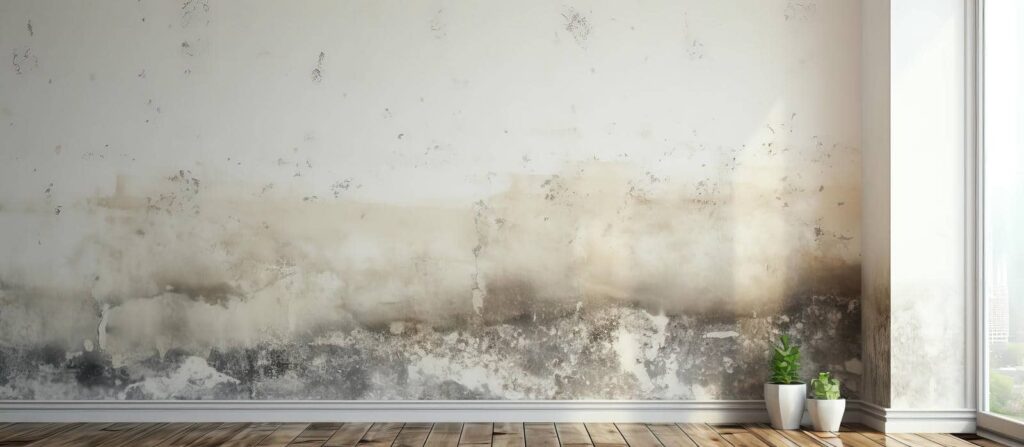
Regularly inspect your home for signs of mold growth, especially in damp areas. Look for discoloration on walls, ceilings, and floors, and be alert for a musty odor—this could indicate hidden mold.
Conduct mold detection with a keen eye, as early identification can greatly ease mold remediation efforts. Pay attention to any increased allergy symptoms among family members, which might signal mold problems.
If you spot any suspicious areas, don’t hesitate to act quickly. Promptly address leaks and moisture sources to prevent mold from taking hold.
Frequently Asked Questions
How Long Does It Take for Mold to Develop After Flooding?
Mold growth can start within 24 to 48 hours after flooding, so you need to take flood recovery precautions immediately. Understanding the mold growth timeline helps you act quickly, safeguarding your space and well-being.
What Materials Are Most Susceptible to Mold Growth?
Wood surfaces and carpet fibers are especially susceptible, absorbing moisture quickly, creating perfect conditions for mold growth. You need to be vigilant in monitoring these materials.
Can I Use Bleach to Kill Mold?
You can use bleach to kill mold, but its effectiveness is limited on porous surfaces. Consider mold alternatives like vinegar or hydrogen peroxide for better results. Always prioritize safety and proper ventilation during cleaning.
Should I Hire a Professional for Mold Removal?
You should consider hiring a professional for mold removal. Their expertise ensures thorough assessment and treatment, reducing health risks and future issues. Professional services provide peace of mind, allowing you to focus on restoring your space.
Is Mold Harmful to Pets?
Mold exposure can seriously impact pet health, causing respiratory issues and allergic reactions. If you notice any signs of mold, it’s essential to address the problem promptly to ensure your furry friend stays safe and healthy.
Review
In the battle against mold, every second counts. By swiftly removing standing water and ensuring proper ventilation, you’re protecting your home while safeguarding your health against a potential mold invasion that can spread like wildfire. Regular cleaning and monitoring are essential to keep mold at bay. Utilize dehumidifiers to maintain ideal humidity levels, and stay vigilant for any signs of growth. With these proactive measures, you can create a mold-free sanctuary in your home.